
.svg)

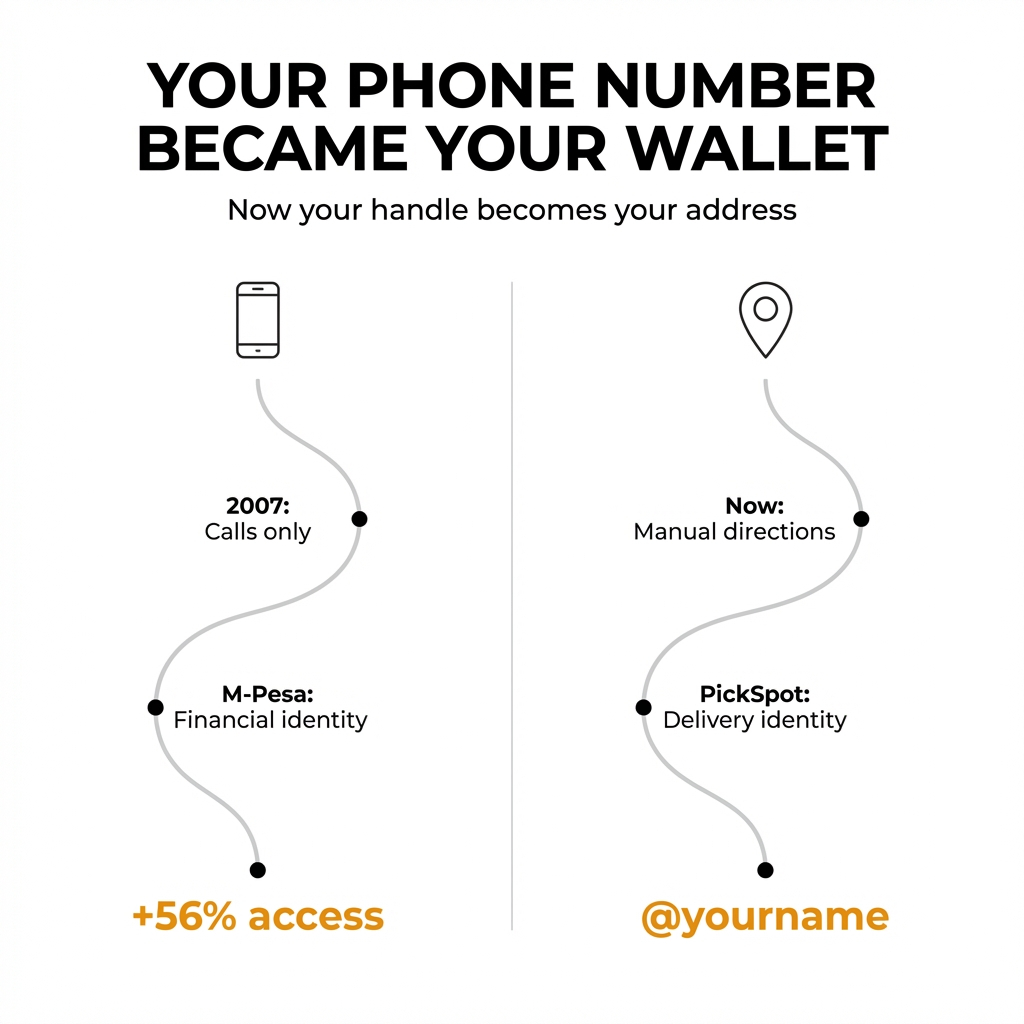
Phone numbers started as contact identifiers. M-Pesa turned them into addresses for money. The number stayed the same. The function changed.After M-Pesa, sending money required one piece of...
Phone numbers started as contact identifiers. M-Pesa turned them into addresses for money. The number stayed the same. The function changed.
After M-Pesa, sending money required one piece of information: a phone number. No bank details. No explanations. The number routed the transaction.
Delivery hasn't followed this pattern. Every transaction resets to manual coordination.
Commerce moved to WhatsApp, Instagram, and Telegram. Discovery happens in DMs. Payment runs through mobile money. Delivery breaks down into negotiation.
The buyer explains their location. Estate name, landmark, gate color, sometimes a pin. The seller forwards this to a rider. The rider calls for clarification. Then calls again.
Next seller, same location, same explanation. Nothing persists.
Mobile money doesn't work this way. The phone number routes payment without coordination. Delivery still requires manual setup every time.
A PickSpot handle is a permanent delivery address. Format: amina@pickspot.world. Set once, reused across all transactions.
The handle routes to a pickup point. Users select from verified local shops and kiosks shown on a map. Choice is based on proximity, hours, or convenience.
When a seller asks for delivery information, the buyer shares the handle. No additional instructions needed.
The parcel goes to the pickup point. Notification arrives when ready. Collection uses a QR code.
Pickup locations can change. Switch agents in the app. The handle stays the same. Parcels automatically route to the new location.
M-Pesa made phone numbers portable financial infrastructure. Change carriers, keep the number. Move locations, keep the number. The number routes money regardless of what changes underneath.
PickSpot handles are infrastructure for deliveries. One address across all sellers and platforms. Configure once, works automatically.
Local agents form the physical layer. Shops and kiosks hold parcels until collection. Same model as M-Pesa agents for cash—local, trusted, already part of daily routes.
Over 12,000 handles claimed already.
Early M-Pesa adoption happened because it removed immediate friction. The benefit was mechanical, not future-facing.
Handles do the same for delivery. Second transaction easier than the first. Repeat behavior becomes automatic.
Claim a handle at pickspot.world
Claim a handle. Select an agent. Use it for the next delivery.